
Sarang means love.
So we put it on the sign, and then spent every day since trying to earn it. Here is what happens behind the door, from the room to the kitchen to the plate.
The room
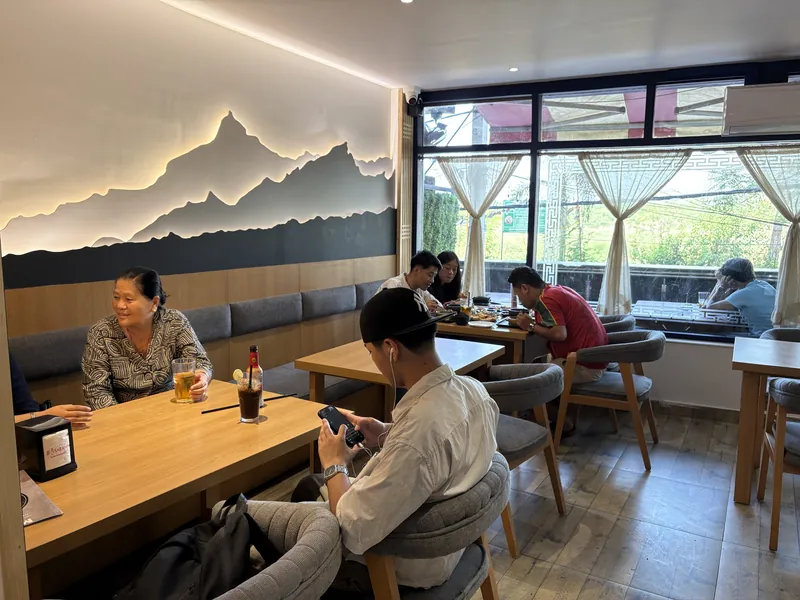
As you come in, you will notice that every corner has been designed with comfort and Korean culture in mind. We are a small restaurant — but we have made a warm and beautiful space out of it.
Grey, white, blue and natural wood. Our mountain artwork, the moon-themed wall, the photo spots, the butterflies, and comfortable seating for thirty to forty guests. Soft Korean music plays underneath all of it.
The terrace
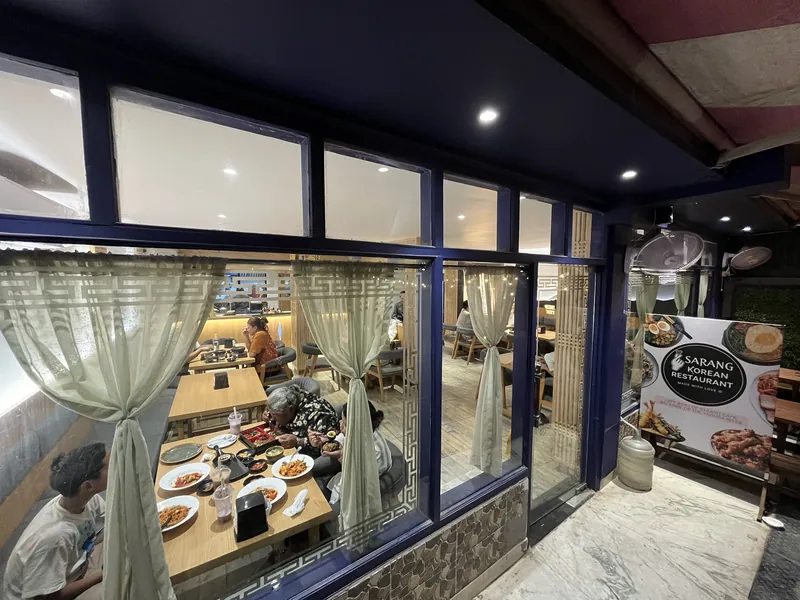
Outside we have a calm seating area where you can watch Majnu-ka-Tilla go by and escape the busy city for a while.
It is a peaceful place to sit, relax and take your time — which, in Delhi, is worth more than another ten covers.
Two kitchens
We run two kitchen sections. One is the live kitchen, where you can watch your food being made — kimbab, ramen, appetisers, drinks and everything quick. There is a beverage counter beside it for the boba and the mocktails.
Behind that is the main kitchen, where the main courses and traditional dishes are cooked. It is compact, but everything has its designated place: vegetables, meat, seafood, sauces, dry ingredients and equipment, all stored separately and properly.
Every vegetable is washed carefully before prep. Meat is handled to hygiene standards. Workstations, tables, boards and equipment are cleaned and sanitised through the day. We believe clean kitchens make great food — food safety matters to us as much as taste.
A short menu, on purpose
You may notice our menu is not very large. That is deliberate. We keep it focused because we want every dish to hold its quality and its Korean flavour — every single time.
Rather than offering hundreds of items, we serve the ones we truly believe in: Korean fried chicken, grilled wings, dumplings, kimbab, jeon, the dosirak lunch box, kimchi bossam, authentic ramen, dolsot bibimbap, hot pot and samgyeopsal barbeque.
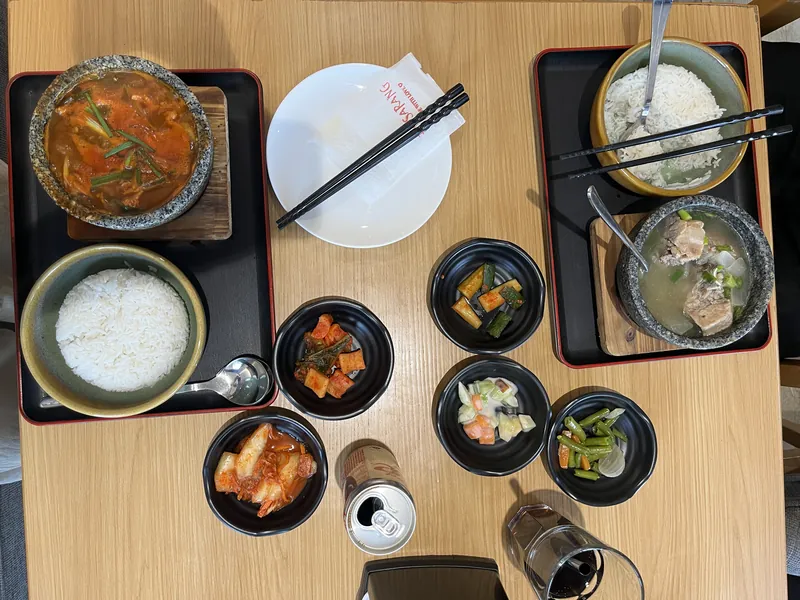
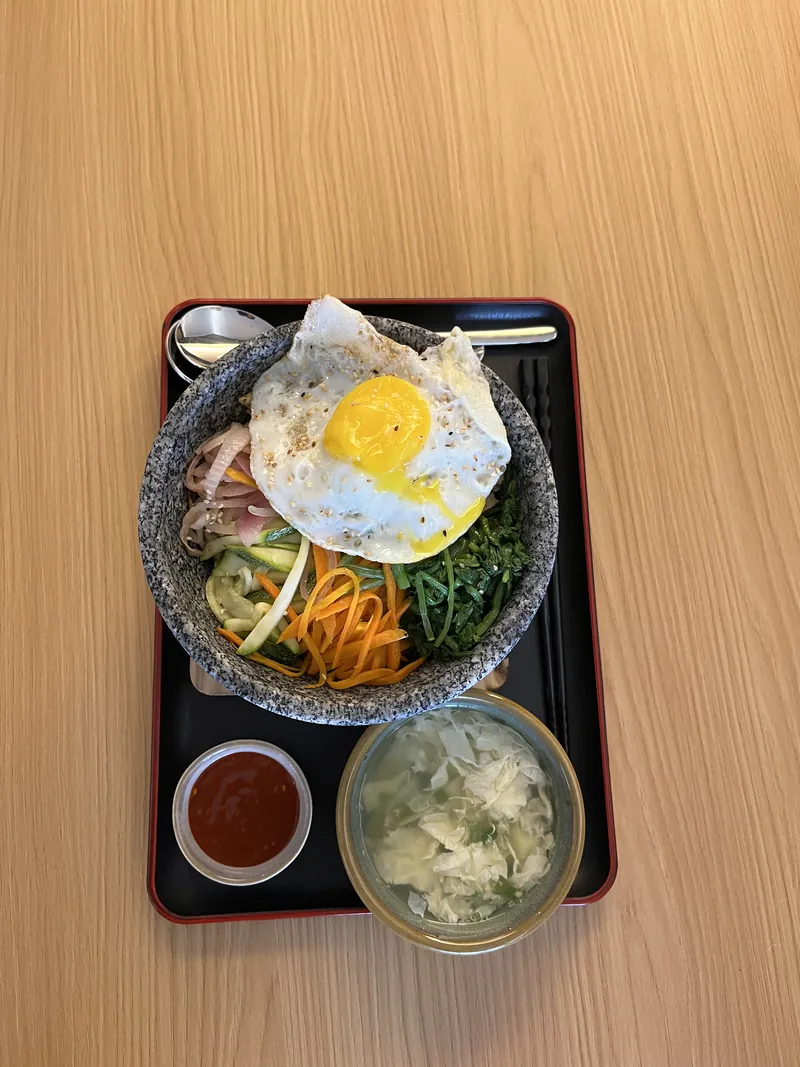
If you want one recommendation, take the Korean soup served with rice in the traditional hot stone bowl. The bowl holds its heat for a long time — thirty minutes in, you can still see it steaming on your table.
The plate
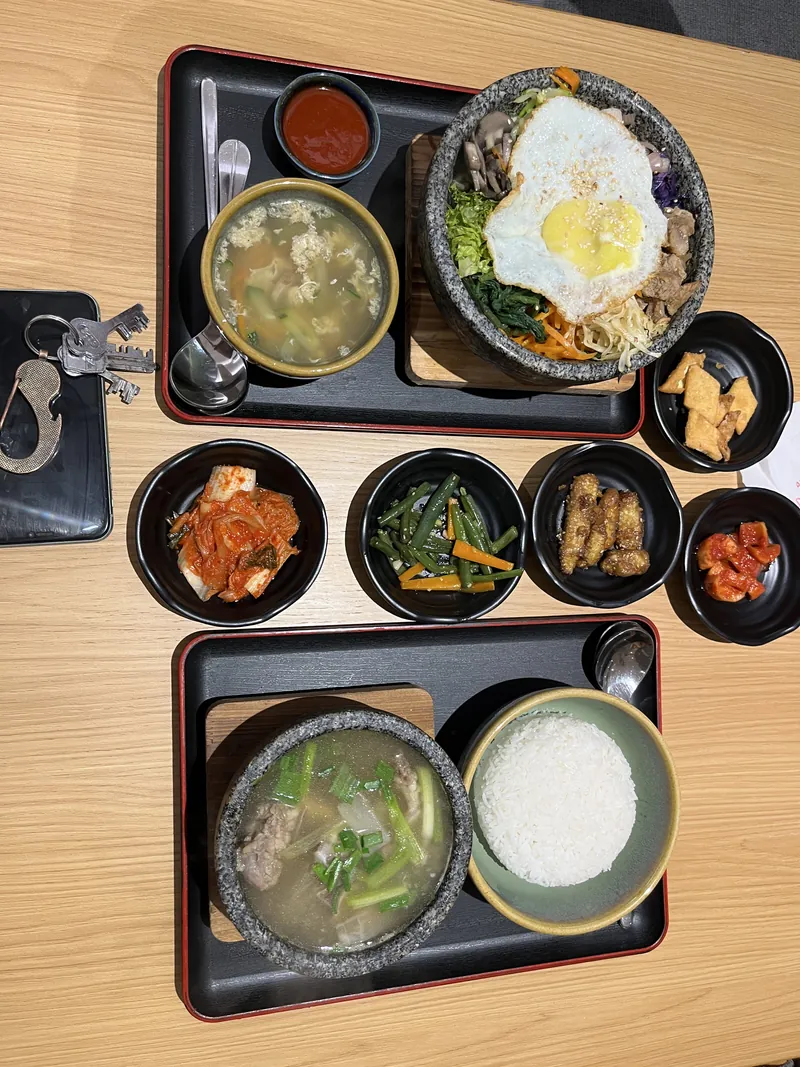
Two restaurants can serve the same dish and give you completely different evenings. Presentation is most of the difference.
Every plate is arranged before it leaves the pass — the side dishes, the soup, the rice, the cutlery, the serving bowls and the order they arrive in. It is all deliberate, and it is all part of eating Korean food properly.
The people
Our service staff wear uniforms inspired by Korean design — the sleeves and the fit worked out so they never get in the way of carrying a tray.
The service itself is Korean too. From the welcome at the entrance to the way a dish is presented at your table, the aim is simple: that every guest feels comfortable, valued and cared for.
Behind all of it is a small office where the unglamorous work happens — inventory, purchasing, accounts, rosters, suppliers, food cost. You will never see it. You would notice immediately if it were not there.
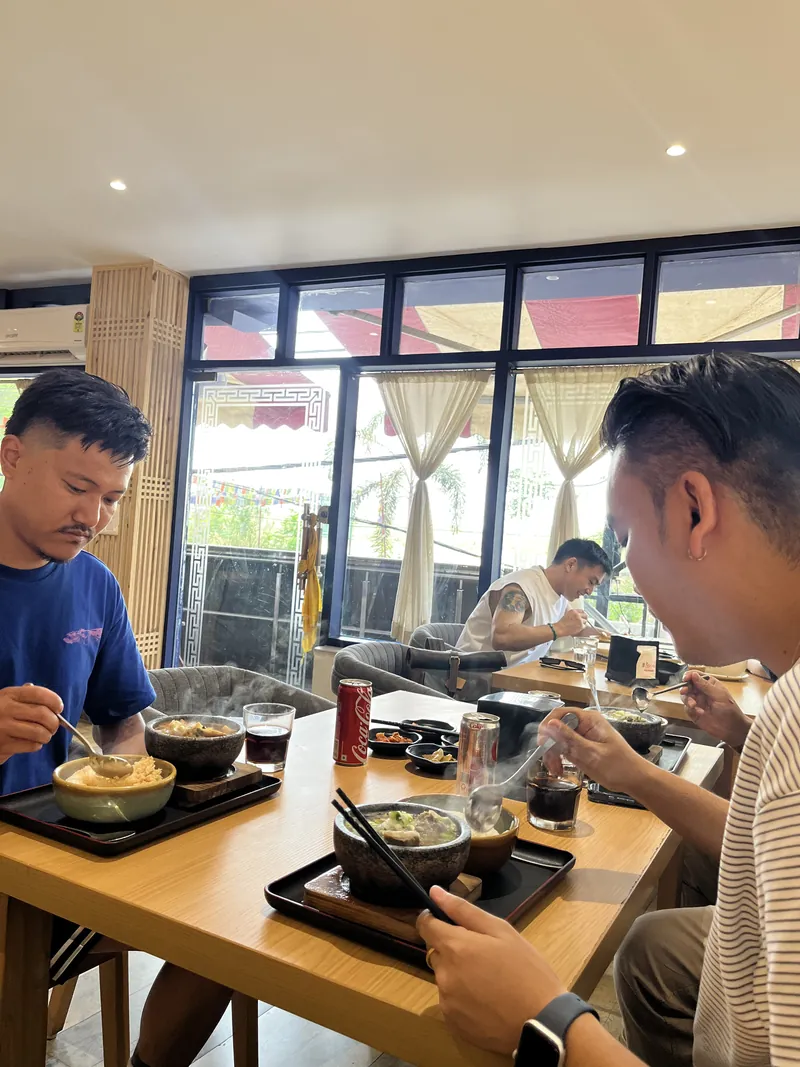
Korean food is not just a meal. It is a tradition of sharing, warmth and togetherness.
The promises behind the plate
Come and see the room for yourself
We are on the lane at Majnu-ka-Tilla, open from eleven in the morning until ten at night.